Wondering whether “West End Billings” means older in-town homes, newer subdivisions, golf-course properties, or acreage with elbow room? The answer is yes. For many buyers, the challenge is not deciding whether the West End is appealing. It is figuring out which part of it actually fits your budget, daily routine, and long-term goals. This guide breaks down how West End neighborhoods differ so you can build a smarter short list and shop with more confidence. Let’s dive in.
Why West End Feels So Different
West End is not a single, uniform neighborhood. The City of Billings and Yellowstone County describe West Billings as a major growth area that stretches from the Yellowstone River north to the Rimrocks and west to 72nd Street West.
That scale matters when you start home shopping. The area covers more than 35 square miles, and city updates in 2024 noted that the population has more than doubled since the 2001 plan. That growth has created a mix of established streets, newer neighborhood pockets, major shopping areas, and edge-of-town acreage options.
From a pricing standpoint, West End also tends to sit above Billings as a whole. Zillow reported an average West End home value of $434,439 as of March 31, 2026, compared with $392,209 for Billings overall. On the same date, West End had 110 homes on the market, and homes were going pending in about 53 days, compared with about 38 days citywide.
Older Core Areas
If you want an established neighborhood feel and more approachable entry points, the older west-end core is often the first place to look. This part of the market includes older ranch-style homes, updated single-family properties, and some attached housing.
Listing examples in this pocket show the range. One home on Country Club Circle was built in 1964 with 4 bedrooms, 2 baths, 1,236 square feet, and a 0.27-acre lot. Another home on Briar Place, built in 1992, offered 5 bedrooms, 3 baths, 2,194 square feet, and updated finishes on a 7,000-square-foot lot.
This area can appeal to buyers who value mature streets, established homes, and a bit more pricing flexibility than some newer sections of the West End. Recent listing examples in these established pockets have clustered in the mid-$300,000s to mid-$400,000s. You may also find a mix of detached homes and townhome-style options here.
What Buyers Often Like Here
- More established streetscapes
- Older homes with renovation potential
- Some smaller lots that may mean less upkeep
- More value-oriented options compared with newer subdivisions
What to Watch Closely
- Age of major systems and finishes
- Remodeling quality in updated homes
- Layout differences in mid-century properties
- Variation from one street to the next
Newer Subdivision Areas
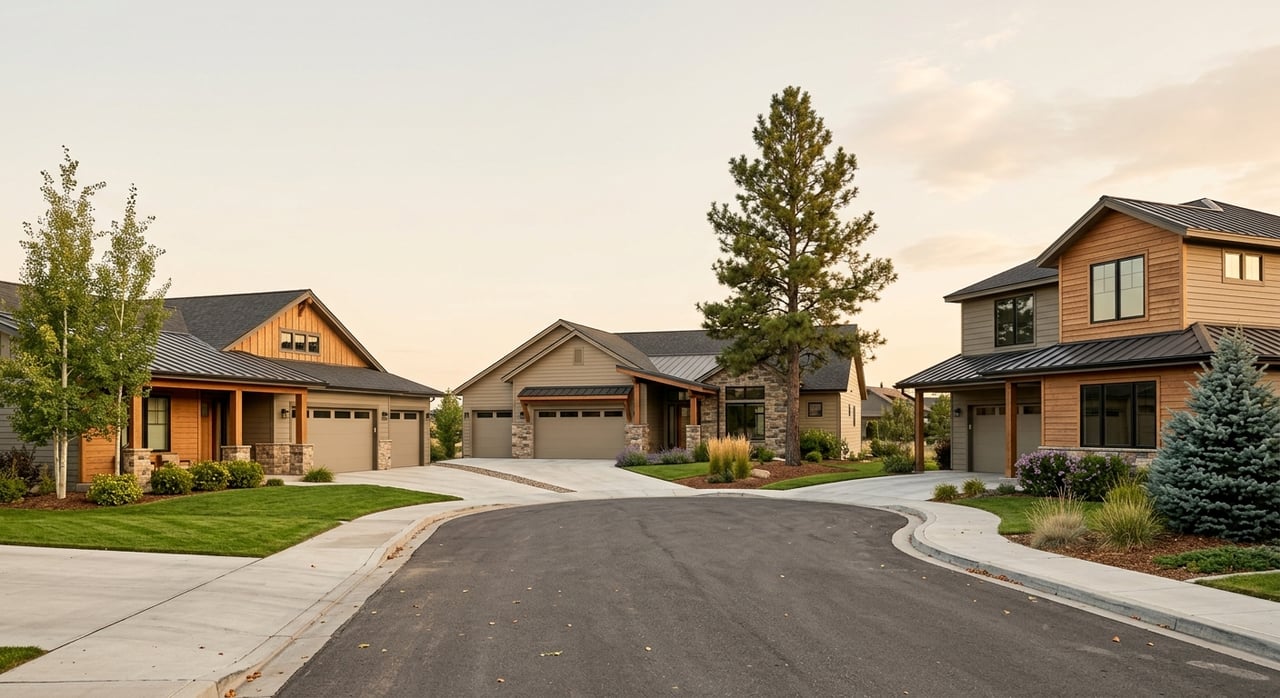
If your wish list includes newer finishes, more square footage, and a more modern layout, the newer subdivision belt may be a better match. Buyers often focus on areas around Copper Ridge, Granite Peak, Shiloh, and nearby streets when they want a newer-construction feel.
Recent listings illustrate the typical pattern. Homes in these pockets have ranged from about 1,589 square feet to more than 3,800 square feet, with price points from the mid-$400,000s into the $700,000s depending on size, layout, and finish level. Examples included 4-bedroom homes around $425,000, $600,000, and $649,000, as well as a larger 5-bedroom home listed at $750,000.
For many move-up buyers, this is where the West End starts to line up with their ideal checklist. You are more likely to see open layouts, larger bedroom counts, newer kitchens, and homes built with current design preferences in mind.
Best Fit for This Pocket
This part of the West End may suit you if you want:
- Newer construction or a newer overall feel
- More living space
- A layout built for everyday flexibility
- A neighborhood setting close to major west-end amenities
Golf-Course And Executive Pockets
Some West End neighborhoods have a more custom and view-oriented character. Around Yellowstone Country Club and nearby golf-oriented streets, homes often sit on larger lots and show more design variation than you see in a standard subdivision.
Recent examples included homes around 3,100 to 3,364 square feet on lots from 0.37 to 0.42 acres, plus a custom-designed one-level home on 0.63 acres. In this golf-course area, listing prices ranged from roughly $507,500 to $798,200, while larger showcase properties elsewhere in the broader West End market reached $1.195 million and $1.395 million.
This pocket tends to attract buyers who care about customization, lot size, views, or a more distinctive home profile. It is also a reminder that the top end of the West End market is much broader than many buyers expect at first glance.
What Sets These Areas Apart
- Wider price range at the upper end
- More custom home features
- Larger lots in many cases
- Strong appeal for buyers prioritizing views or a more tailored home feel
Far-West Acreage Areas
The farther west you go, the more the West End begins to shift from suburban to edge-of-town. This is where buyers start looking for land, separation between homes, shop space, horse property, or a more rural feel while still staying connected to Billings.
The original West Billings plan noted that subdivisions in this area included acre or multi-acre lots, often served by community systems or private wells and septic systems. Current listings support that pattern. Examples included a 10-acre parcel on Alkali Creek Road listed at $349,500, nearby land listings around $297,000 to $500,000 for roughly 6 to 13 acres, and a nearly 10-acre property near Briarwood with a home and views.
Another listing on Neibauer Road was described as a 10-acre horse property with fencing, loafing sheds, and wells. If you want room for animals, outbuildings, or future flexibility, this part of the market deserves a closer look.
Acreage Searches Need More Diligence
Acreage shopping often brings extra questions, such as:
- Well and septic setup
- Utility availability
- Access and road conditions
- Land usability for your intended plans
That extra complexity is one reason many buyers benefit from a team that understands both residential search strategy and land-related due diligence.
Daily Life In West End
Neighborhood fit is not just about the house. It is also about how your daily routine works once you move in.
The West Billings plan identifies major west-side travel corridors including I-90, Grand Avenue, King Avenue West, Rimrock Road, Shiloh Road, and 72nd Street West. It also notes that Shiloh Road between I-90 and Rimrock Road serves as a community entryway corridor, with growth-related improvements tied to Shiloh Road and King Avenue West.
If you rely on transit, the City of Billings lists Route 13 King Avenue West, Route 21 North Westend Circulator, and Route 23 South Westend Circulator. That means bus service is available in the West End, though it is focused along major corridors rather than every residential street.
Schools And Community Services
For buyers who want to understand the West End school footprint, Billings Public Schools identifies Ben Steele Middle School as being on the west end of Billings. The school opened in 2017 and sits at 5640 Grand Avenue on nearly 40 acres of former farmland.
Billings West High School is located at 2201 St. John’s Avenue. The district also notes that Billings has 21 elementary schools across the city, including the West End. For many buyers, that makes it helpful to narrow your search by specific pocket rather than treating the entire West End as one area.
Shopping, Parks, And Recreation
One of the biggest advantages of the West End is convenience. Visit Billings describes Rimrock Mall as the city’s premier mall with 100 specialty shops, while Shiloh Crossing is an 80-acre shopping, dining, and entertainment center anchored by major retailers and an IMAX theater. West Park Promenade adds another outdoor retail option in the area.
For outdoor time, the West End also offers a strong mix of park access. Rimrock West Park includes paved jogging trails, a playground, and an athletic field. Copper Ridge Park offers paved trails and a natural area, while Yellowstone Family Park includes a playground and athletic field.
High Sierra Park adds a disc golf course, dog park, natural area, restrooms, and athletic field. The West End also includes Centennial Dog Park and the Shiloh Conservation Area, which features a 2-mile trail system and an urban fishery. If you want suburban convenience without giving up easy access to outdoor spaces, this part of Billings stands out.
How To Narrow Your Search
A good West End short list usually comes down to four big filters: budget, lot size, commute pattern, and lifestyle priorities. Once you get honest about those four things, the map gets much easier to read.
Here is a simple way to think about it:
- Choose the older core if you want established streets, older ranchers, and more approachable pricing.
- Choose newer subdivisions if you want newer finishes, larger homes, and a more modern layout.
- Choose golf-course or executive pockets if you want a custom feel, larger lots, or view-oriented homes.
- Choose far-west acreage areas if you want land, shop potential, horse property, or more separation.
The biggest mistake buyers make is searching the West End as if every listing offers the same lifestyle. In reality, this part of Billings is a continuum, from older in-town homes near major retail to newer subdivisions, then on to custom homes and acreage farther west.
The right fit depends on how you want to live, not just what square footage you can buy. If you want help comparing neighborhood pockets, weighing tradeoffs, and finding the right West End match for your budget and goals, The Premier Group can help you navigate the options with local insight and practical guidance.
FAQs
What makes West End Billings different from other parts of Billings?
- West End is a large growth area with a mix of established neighborhoods, newer subdivisions, golf-course homes, major retail corridors, parks, and far-west acreage properties.
What price range should you expect in West End Billings neighborhoods?
- West End pricing varies by pocket, with older core areas often in the mid-$300,000s to mid-$400,000s, newer subdivisions commonly in the mid-$400,000s to $700,000s, and upper-end custom properties reaching much higher.
Which West End Billings areas may suit buyers who want newer homes?
- Buyers looking for newer finishes and more modern layouts often focus on subdivision areas around Copper Ridge, Granite Peak, Shiloh, Peregrine, and nearby streets.
Which West End Billings areas may suit buyers who want land or horse property?
- Buyers who want acreage, shop space, or horse property often look farther west toward areas near Alkali Creek, Neibauer, and other edge-of-town transition zones.
How is commuting handled in West End Billings?
- West End commuting is largely corridor-based, with major routes including I-90, Grand Avenue, King Avenue West, Rimrock Road, Shiloh Road, and 72nd Street West, plus bus service on select west-end routes.
What amenities are available in West End Billings for everyday living?
- West End offers major shopping and dining areas, including Rimrock Mall and Shiloh Crossing, along with parks, trails, a dog park, athletic fields, and the Shiloh Conservation Area.