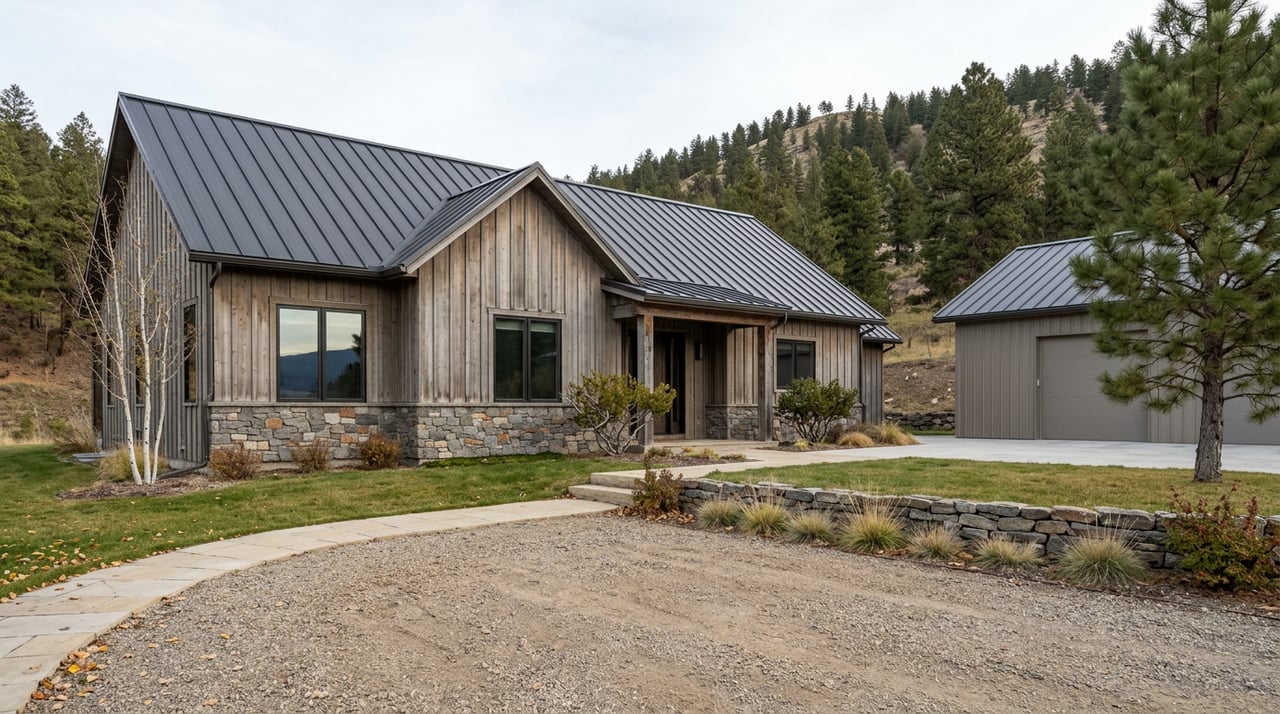
If you buy a short-term rental in Red Lodge, do you actually get to run it as one? Most buyers assume the answer is yes. The listing shows trailing revenue, the property has a track record on the booking sites, and the seller can point to a current city registration hanging in a frame near the thermostat. None of that transfers with the deed.
Red Lodge's short-term rental registration terminates the moment a property changes hands. The buyer has to apply for a new one, and depending on where the city sits against its own cap, that application might not be approved at all. A buyer should account for that uncertainty when evaluating the property's potential income.
The Registration Dies at Closing
Red Lodge's own compliance page spells this out plainly: if you sell or otherwise transfer the property, the certificate terminates and the new owner has to submit a fresh application. There's no grandfathering across a sale. A property that has operated as a licensed short-term rental for years, generating the exact income a buyer is underwriting their offer around, resets to zero the day title changes hands.
The city also runs these registrations on an annual clock, not an indefinite one. Certificates have to be renewed every year, and any certificate not renewed by September 1 is automatically terminated, with the owner required to apply for a new one if one happens to be available. The September 1 deadline has passed. Any Red Lodge short-term rental owner who had not renewed by then has had their certificate automatically terminated and must apply again if a registration is available.
This is not a technicality worth skimming past. It means the trailing twelve months of revenue on a listing tells you what the house earned under someone else's registration, not what you're guaranteed to earn under your own.
How Red Lodge Set Its Short-Term Rental Cap
A Wyoming News report described Red Lodge's adoption of Ordinance 963 in August 2023, following a committee process that began because the town's rental housing was tight and short-term rentals took the blame. The final ordinance caps short-term rentals at 20 percent of the city's housing stock or dwelling units, and once that ceiling is hit, new applicants go on a waiting list until an existing permit lapses or gets revoked.
The number itself was a compromise. The committee that studied the issue recommended a 15 percent cap. The city council pushed it to 20 percent before passing it, on a vote Mayor Dave Westwood described as tight.
In the same Wyoming News report, council member Sandy Conlee said of the process, "A lot of what this committee suggested needed to be done was not done," adding that the committee's own survey had actually debunked the idea that short-term rentals were the reason the town was short on workforce housing.
For a buyer, the practical question is whether a registration is available under the cap and waiting-list rules described above.
The same Wyoming News report quoted Mayor Dave Westwood saying that many residents don't want Red Lodge to become a resort town and want it to stay what he called their own private spot. That sentiment is part of the local context for buyers, alongside the zoning rules.
Approvals Required to Operate a Short-Term Rental
Getting a short-term rental legally operating in Red Lodge means clearing four separate approvals, each run by a different agency on its own timeline.
| Step | Agency | What Happens |
|---|---|---|
| City registration | City of Red Lodge, via its online portal | Annual registration, must be renewed by September 1 each year |
| State health plan review | Carbon County Sanitarian (Jesse Gutierrez) | Plan review typically completed within 3 business days, followed by an in-person inspection |
| State accommodations license | Montana DPHHS | Calendar-year license (January through December), renewal notices sent by email only, in October |
| Fire safety inspection | Red Lodge Fire Department | Inspection valid for one calendar year from the inspection date |
Each of those steps has its own fee, its own inspector, and its own expiration clock, running independently of the others. A buyer who assumes they can close on a Friday and start taking bookings the following weekend should account for those separate timelines.
Recent Short-Term Rental Market Figures
Recent market figures also provide context for buyers evaluating short-term rental income. As of July 2026, Red Lodge had 405 active short-term rental listings, with the average listing earning $24,500 in trailing twelve-month revenue, according to AirDNA's market data. Occupancy sat at 45 percent of available nights, with an average daily rate of $294 and a revenue-per-available-night figure of $131.
From July 2025 to July 2026, average revenue per listing fell 18.3 percent and occupancy dropped 7.3 percent, while active listings in the market rose 7.7 percent over the same period. This combination of lower average revenue and occupancy alongside a higher listing count is relevant context for a buyer evaluating potential returns.
Location matters for anyone comparing a listing inside city limits to one in the surrounding county. The cap only governs registrations within Red Lodge proper. City registration counts and market-wide listing figures describe different scopes.
What to Do Before You Write an Offer
None of this means a Red Lodge short-term rental is a bad purchase. It means the diligence has to happen before the offer, not after closing.
Call the city and ask where the current registration count stands against the cap. That number isn't published in real time anywhere a buyer can easily check on their own, which means it's a phone call worth making before you get emotionally attached to a specific listing.
Treat the seller's trailing revenue as historical information about the property, not a guarantee about your ownership. Build a permit contingency into the purchase agreement that gives you an out if the new registration application is denied or lands on the waiting list.
Ask the seller directly whether their registration is current, when it was last renewed, and whether it falls under the original grandfathered group or a post-ordinance application. A lapsed registration doesn't just complicate your timeline, it may mean you're applying as a brand new entrant into a capped system rather than stepping into an existing slot.
Frequently Asked Questions
Can I keep the seller's existing Airbnb listing, reviews, and booking history? No. The platform listing and reviews belong to the host account, not the property, and the city registration that legally allows short-term rental in the first place terminates on transfer of ownership. You start over on both fronts.
What happens if the 20 percent cap is already full when I apply? Your application goes on the waiting list established under Ordinance 963, and you're only issued a permit when an existing registration expires and isn't renewed or gets revoked. There's no published timeline for how long that wait might take.
Does the cap apply to short-term rentals outside city limits? No. Ordinance 963 governs registrations within the City of Red Lodge. Market-wide listing counts and city-specific registration counts describe different scopes.
Buying a short-term rental in Red Lodge is a real strategy, and the town's setting near the Beartooth Mountains keeps it in demand. But the math only works if you underwrite the deal around what you can actually get permitted to do, not around what the seller was doing under a registration that ends the day you close. If you're weighing a Red Lodge property against other options in south-central Montana, The Premier Group can walk through the registration status, the local permit timeline, and what a specific address is actually cleared to do before you write an offer.
This article is general information, not legal, tax or financial advice. Consult a qualified professional about your situation.