Buyers cross the county line into Laurel expecting the same trade they'd make in any small town outside a bigger city: a lower price, a longer runway to think, more room to negotiate before a home gets away from them. That trade exists in a lot of Montana satellite towns most years. It is not what the data shows in Laurel right now.
Every read on Laurel's market this year, from a January snapshot to a fresh one pulled in late July, has put days on market somewhere between 27 and 58 days. Every comparable read on Billings proper across the same stretch of 2026 has landed between 98 and 106 days. The town that is supposed to be the patient option is moving in weeks. The city next door is moving in months.
The Numbers Flip When You Actually Look
| Laurel | Billings | |
|---|---|---|
| Days on market, 2026 snapshots | 27–58 days (January, mid-year, and July reads) | 98–106 days (February through April reads) |
| Months of supply | About 1.9 months as of mid-2026 | About 4.8 months as of February 2026 |
| Sale-to-list ratio | Sellers reportedly netting close to 98.6% of asking | More room reported between list and sale price |
| Reported median price, same year | Anywhere from $262,500 to $415,000 depending on the month and whether the figure is a list price or a closed sale | $375,000 to $429,900 depending on the month |
Look at the width of those price ranges. Laurel's spans roughly $150,000. Billings' spans about $55,000, on a market with a higher price floor. That gap in stability, not the price itself, is the real story.
Why a Market This Small Swings This Hard
Here is the mechanism: Laurel is a market where a single month can produce a literal handful of closed sales. Redfin's count for January 2026 put the number at three. Billings, over the same general stretch of the year, was recording over a hundred sales most months, 101 in February and 129 in March according to separate reads. When your entire month of transactions fits on one hand, a single unusual sale, a single motivated seller, or a single buyer willing to pay near full price can swing the median by tens of thousands of dollars and cut the reported days-on-market number in half, without any real shift in how badly people want to live in the town.
That is why one tracker's snapshot of Laurel this year showed a median sale price near $365,000, another showed $347,400, and a more recent pull put it at $262,500. None of those numbers is necessarily wrong. They are measuring a market too thin to hold still from one month to the next.
A median built on three sales is not a snapshot of the market. It is a snapshot of whoever happened to close that month.
Billings, with a large enough volume of monthly sales to smooth out noise, gives buyers and sellers a median they can actually lean on. Laurel gives them a number that moves even when nothing about the town itself has changed.
What This Means If Laurel Is the Target
If you have decided you want to live in Laurel specifically, not simply somewhere near Billings, the current numbers change how you should approach the search.
Sellers there have reportedly been netting close to full asking price, which is not the negotiating room that a small town's reputation usually promises. Financing needs to be lined up before you start touring, not after you find something. In a market where multiple 2026 reads put the time from listing to sale under two months, a pre-approval that takes two weeks to process can cost you the specific house you wanted.
It also means that watching from the sidelines, waiting for a Billings-style slowdown to reach Laurel, may not pay off. A town this size does not automatically track the metro's pace just because it sits inside the same commuting radius. Laurel's inventory is a function of how many Laurel homeowners decide to sell in a given month, not a function of what Billings' much larger pool of sellers is doing twenty miles away.
What a Dollar Buys on Each Side of the County Line
Price comparisons only mean something once you know what you are actually buying, and Laurel's housing stock looks different from Billings' in ways that matter more than the median suggests.
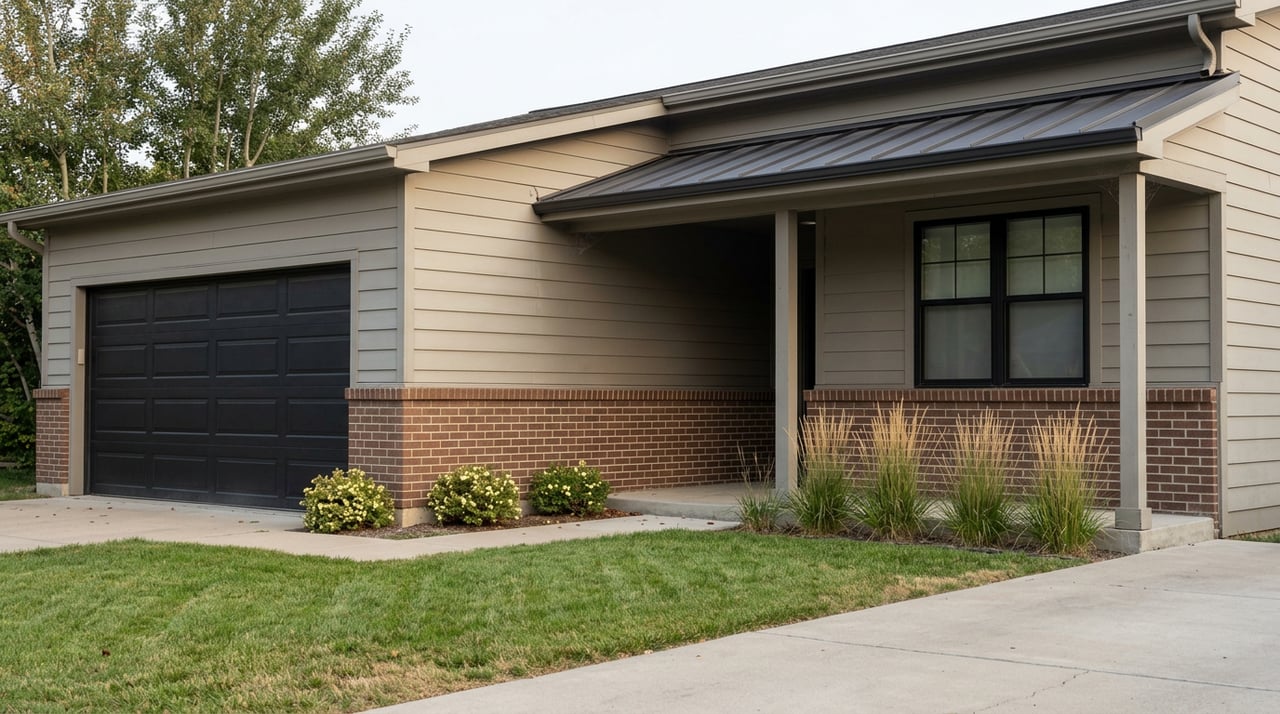
Laurel grew up as a Northern Pacific railroad town, and its housing reflects layers built up over more than a century: century-old homes near the historic Main Street corridor, ranch-style properties from the town's mid-century growth, and newer construction on the edges of town in subdivisions like Cherry Hills, Beartooth Pointe Estates, and Vista Buttes. Some of the newer parcels run to 20 acres or more and are horse-friendly, a combination that does not exist inside Billings city limits at any price.
Laurel's local economy still runs on the same three legs it always has: the Montana Rail Link yard, the CHS refinery, and manufacturers like Wood's Power Grip. That steady, local employment base is part of why so few Laurel homes hit the market in a given month. People who work in Laurel tend to stay in Laurel, and the ones who do sell are often trading one Laurel address for another rather than leaving the labor pool that created demand in the first place.
Main Street itself has kept its own identity through all of this. The Pelican Cafe and High Plains Brewing anchor the historic downtown blocks, alongside longstanding shops like Blessed Beginnings and The Yogurt Shop, while Albertsons, Tractor Supply, and a Walmart Supercenter handle the everyday errands on the edge of town. It is a town that functions on its own, not a bedroom community that happens to have a grocery store.
Billings offers the opposite trade: far more inventory, far more variety in age and style of home, and right now, more negotiating leverage. The Federal Reserve Bank of St. Louis tracks the median listing price for the Billings, MT metro area at $495,000 as of May 2026, a figure that sits well above the sale-price medians reported for the city proper and reflects the wider range of listings, from condos to larger new-construction homes, that a bigger market supports.
Frequently Asked Questions
Is Laurel actually cheaper than Billings right now? Usually, but the size of that gap has shifted dramatically month to month in 2026 because Laurel's low sales volume makes its median unstable. Reported figures for Laurel this year have ranged from the high $200,000s to the low $400,000s depending on the month and whether the number reflects list price or a closed sale. The more reliable comparison is what a given budget buys in lot size, age of home, and proximity to Laurel's own Main Street versus Billings' broader inventory.
How fast do I need to move if I want a home in Laurel? Faster than you'd expect from a small town. Multiple 2026 reads put Laurel's time on market well under two months, and sellers have reportedly been netting close to full asking price. A buyer who wants a specific Laurel listing should have financing fully in place before touring, not after finding a home they like.
If you are trying to decide between Laurel's tight, fast-moving inventory and Billings' larger, more negotiable market, that is exactly the kind of comparison The Premier Group works through with buyers every week. You can Search Homes across both markets and see today's actual listings rather than a median that may already be out of date by the time you read this.